In the rapidly evolving landscapes of biohacking, wellness, and anti-aging medicine, terms like peptides and steroids are frequently grouped together. Both categories contain compounds used to enhance athletic performance, accelerate muscle recovery, promote fat loss, and combat age-related decline.
However, despite these overlapping outcomes, classifying them under the same umbrella is a fundamental misconception. Are peptides considered steroids? The direct short answer is no. Peptides and steroids belong to entirely different chemical families, interact with the human body through completely different biological pathways, and carry starkly different regulatory and safety profiles.
Understanding the distinction between peptides vs steroids is essential for patients, athletes, and fitness enthusiasts navigating performance-enhancing options, anti-aging therapies, or regenerative medicine in the United States.
Understanding the Basics: Definitions and Biological Chemistry
To grasp why peptides are not anabolic steroids, it helps to examine their foundational chemical structures.
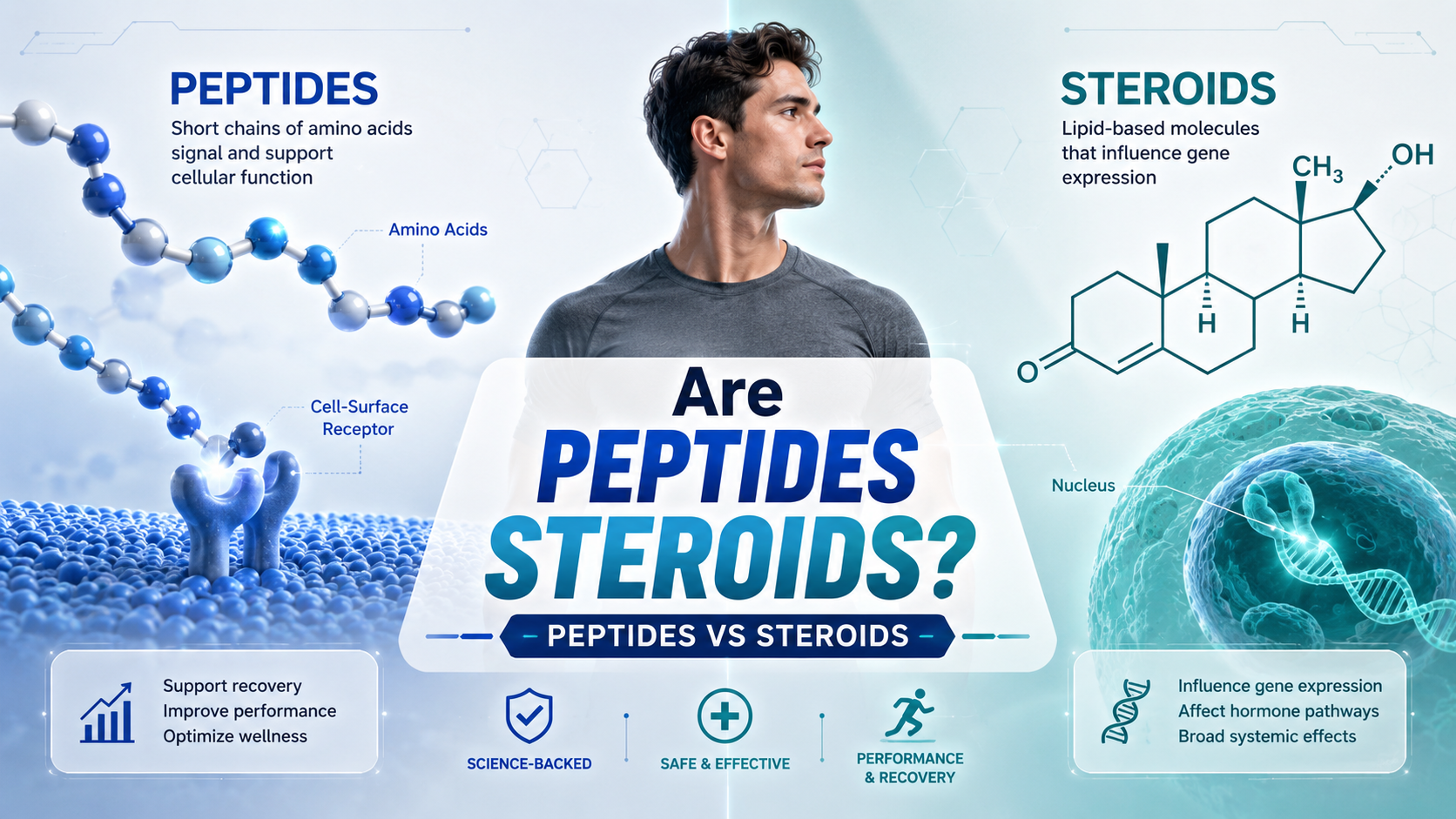
       [ PEPTIDES ]                          [ STEROIDS ]
Short chains of Amino Acids          Four fused Carbon Rings (Sterane Core)
      (Protein Fragments)                      (Lipid-based)
               │                                     │
               ▼                                     ▼
 Binds to Surface Receptors            Passes Cell Membranes Directly
 (Triggers Cascade Signals)            (Binds to Nuclear Receptors)
               │                                     │
               ▼                                     ▼
  Stimulates Natural Secretion         Replaces/Suppresses Natural Hormones
What Are Peptides?
Peptides are short chains of amino acids—the fundamental building blocks of proteins—linked together by peptide bonds. By scientific definition, a molecule containing between 2 and 50 amino acids is classified as a peptide. Once a chain exceeds 50 amino acids, it is generally considered a full protein (such as insulin or human growth hormone).
In the body, peptides function primary as cellular messengers. They attach to specific receptors on the surface of target cells, transmitting instructions to stimulate, inhibit, or regulate various physiological processes. Common examples include:
Semaglutide & Tirzepatide: GLP-1 receptor agonists used for metabolic regulation and weight loss.
CJC-1295 & Ipamorelin: Growth Hormone Releasing Peptides (GHRPs) that prompt the pituitary gland to produce endogenous Growth Hormone (GH).
BPC-157 & TB-500: Regenerative compounds that accelerate tissue repair and wound healing.
What Are Steroids?
Steroids are lipid-based compounds characterized by a specific core structure consisting of four fused carbon rings (the cyclopentanoperhydrophenanthrene skeleton). Unlike peptides, steroids are not made of amino acids; they are derived from cholesterol.
The steroid family is diverse, including:
Corticosteroids: Naturally produced by the adrenal cortex (e.g., cortisol, prednisone) to manage inflammation and immune response.
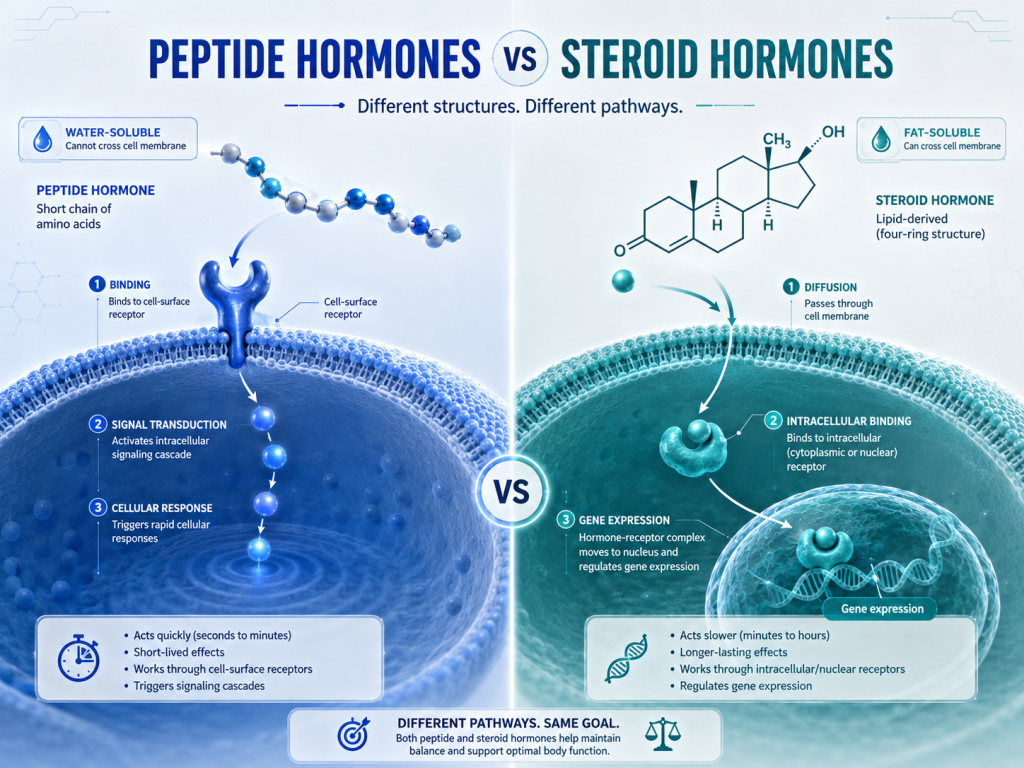
The distinction between peptide hormones vs steroid hormones comes down to solubility and receptor interaction:
Water Solubility: Peptides are water-soluble (hydrophilic). They cannot easily cross the lipid bilayer of cell membranes, so they bind to extracellular receptors on the cell surface. This triggers a secondary messenger cascade inside the cell.
Fat Solubility: Steroids are fat-soluble (lipophilic). They freely diffuse through cell membranes, enter the cell cytoplasm, bind to intracellular receptors, and travel directly to the nucleus to alter gene expression and protein synthesis.
Key Differences: How They Work in the Body
When analyzing the difference between peptides and steroids, the crucial operational distinction lies in whether a compound stimulates natural production or replaces it.
Peptides work via signaling cascades. When you administer a peptide secretagogue like Ipamorelin, the peptide does not replace growth hormone in your bloodstream. Instead, it instructs your pituitary gland to release its own stored growth hormone in natural, physiological pulses.
Anabolic steroids operate far more aggressively. When exogenous testosterone, trenbolone, or nandrolone enters the body, it directly floods androgen receptors across muscle, bone, and neural tissue.
Impact on Natural Hormone Production
One of the defining risks of anabolic steroids is the suppression of the Hypothalamic-Pituitary-Gonadal (HPG) axis. Because the body detects massive exogenous levels of hormones, it triggers a negative feedback loop, shutting down endogenous testosterone production and causing testicular atrophy. Users typically require Post-Cycle Therapy (PCT) to restart natural hormone production.
Peptides rarely cause complete endocrine shutdown. Because growth hormone secretagogues work with the body's natural negative feedback mechanisms, pituitary secretion remains regulated, minimizing the risk of permanent organ suppression.
Are Peptides Anabolic Steroids?
Are peptides anabolic steroids? Absolute not. While some peptides exhibit anabolic (tissue-building) downstream effects—such as increasing IGF-1 or elevating human growth hormone—they lack the steroid carbon structure and do not bind to androgen receptors. They are functionally, chemically, and biologically distinct from anabolic-androgenic steroids.
Peptides vs Steroids: Comparison Matrix
To clearly see how these two therapeutic classes compare side-by-side:
Feature
Peptides
Anabolic Steroids
Chemical Structure
Short chains of amino acids (2–50)
Four-ring carbon lipid core (Cholesterol-based)
Primary Mechanism
Binds cell-surface receptors to signal natural release
Diffuses into cells to alter gene transcription directly
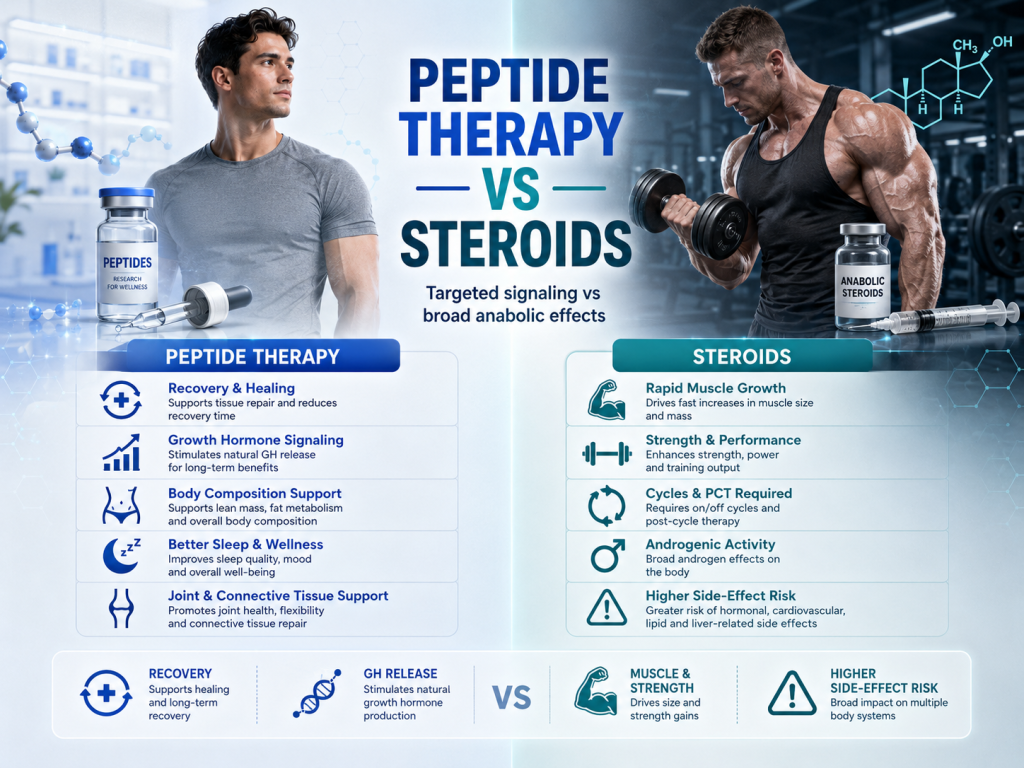
Anabolic Steroids: Highly effective at forcing rapid protein synthesis and nitrogen retention. Used medically for severe muscle-wasting conditions (e.g., cachexia, severe burns), but widely abused in bodybuilding for rapid hypertrophy.
Peptides: Promotes steady lean tissue growth, reduced recovery times, and visceral fat loss. GH secretagogues (Sermorelin, CJC-1295, Tesamorelin) boost natural Growth Hormone and IGF-1 levels without inducing androgenic side effects like hair loss or prostate enlargement.
Tissue Repair and Joint Healing
Anabolic Steroids: While some steroids (like Anavar or Deca-Durabolin) can boost collagen synthesis or mask joint pain through water retention, high androgen levels can actually decrease collagen cross-linking, making tendons stiffer and more prone to rupture.
Peptides: Healing peptides such as BPC-157 (Body Protection Compound) and TB-500 (Thymosin Beta-4) specifically target angiogenesis (new blood vessel creation), cell migration, and tendon-to-bone repair, making them superior for soft-tissue injuries.
Anti-Aging and Longevity
In anti-aging medicine across the US, peptide therapy has largely superseded harsh hormonal replacement strategies for general rejuvenation. Peptides allow physicians to optimize metabolic function, sleep quality, skin elasticity, and immune health with minimal disruption to the patient's baseline biology.
Legal Status and Regulatory Overview in the US
The question "are peptides legal in the US?" involves a nuanced legal framework enforced by the FDA, DEA, and sports regulatory agencies like USADA.
Category
Regulatory Body
Legal Status in the US
Prescription Needed?
Common Classification
Prescription Peptides
FDA
Fully Legal for medical use
Yes
FDA-Approved Drug / Compoundable
Research Peptides
FDA / FTC
Gray Market (Not for human consumption)
No (Sold for research)
Unapproved New Drug
Anabolic Steroids
DEA / FDA
Fully Legal ONLY with strict prescription
Yes
Schedule III Controlled Substance
Compounded Peptides
FDA (503A/503B)
Restricted under FDA Category 1/2 lists
Yes
Prescription Pharmaceutical
Peptides in Sports
WADA / USADA
Banned in competitive athletics
N/A
Prohibited Substance (S2 Category)
Legality and Regulation: Are Peptides Legal in the US?
Navigating the US legal landscape requires distinguishing between controlled substances, FDA-approved therapeutics, and research compounds.
FDA Regulations and Compounding Pharmacy Rules
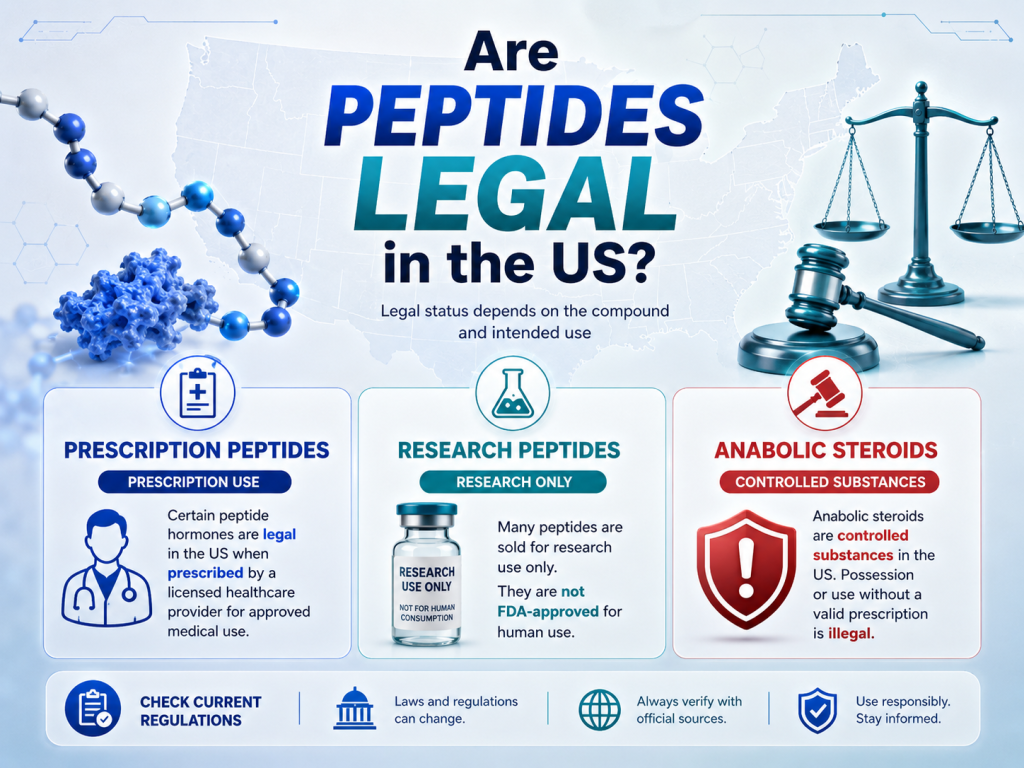
Are peptides legal in the US? Yes, provided they are prescribed by a licensed healthcare provider and sourced through regulated channels.
Approved Peptides: Compounds like Semaglutide, Tirzepatide, Tesamorelin, and Insulin are fully FDA-approved for specific medical conditions.
Compounded Peptides: Many anti-aging clinics use 503A compounding pharmacies to prepare custom peptide formulations (e.g., Sermorelin, Ipamorelin). The FDA periodically updates its Category 1 and Category 2 lists under the Anabolic Steroid Control Act and Food, Drug, and Cosmetic Act, placing restrictions on certain peptides (such as BPC-157 or AOD-9604) regarding pharmacy compounding due to safety evaluation standards.
DEA Scheduling: Steroids vs Peptides
Under the Anabolic Steroids Control Act of 1990 (and expanded in 2004), anabolic steroids are classified as Schedule III Controlled Substances in the United States. Unlawful possession, distribution, or possession without a valid medical prescription is a federal offense carrying severe criminal penalties.
Peptides are not controlled substances under the Controlled Substances Act (CSA). While selling unapproved peptides for human consumption violates FDA regulations, mere possession of non-scheduled peptides does not carry the criminal charges associated with Schedule III anabolic steroids.
Sports Regulations: WADA and USADA
While many peptides are legal for medical prescription in the US, they are strictly prohibited in tested athletics. The World Anti-Doping Agency (WADA) and the United States Anti-Doping Agency (USADA) list both anabolic steroids (Section S1) and peptide hormones/growth factors (Section S2) on their Prohibited List. Athletes using peptides like CJC-1295, BPC-157, or GHRPs risk suspension and bans.
Side Effects and Health Risks
Because peptides and steroids act via different pathways, their safety profiles diverge significantly.
Anabolic steroids produce significant systemic strain due to androgen receptor saturation throughout the body:
Cardiovascular Strain: Marked drop in HDL (good cholesterol), increase in LDL (bad cholesterol), left ventricular hypertrophy, and elevated blood pressure.
Hormonal Imbalance: Shutdown of natural testosterone, testicular atrophy, and aromatization (conversion of excess androgen into estrogen, causing gynecomastia and fluid retention).
Organ Stress: Oral anabolic steroids are C-17 alpha-alkylated, making them hepatotoxic (toxic to the liver).
Side Effect Profile of Peptides
Peptides generally present a far milder side effect profile because they act via targeted receptor pathways:
Localized Reactions: Redness, swelling, or slight discomfort at the subcutaneous injection site.
Transient Effects: Mild fluid retention, increased hunger (especially with GHRP-6 or Ghrelin mimetics), or brief head flushes.
Endocrine Safety: Peptides do not cause liver toxicity or HPTA shutdown. However, long-term unmonitored use of high-dose growth hormone secretagogues can impact insulin sensitivity, requiring blood sugar monitoring.
Frequently Asked Questions
Are peptides the same as steroids?
No, peptides and steroids are chemically and biologically different. Peptides are amino acid chains that signal natural body processes, while steroids are cholesterol-based lipids that directly bind to androgen receptors to manipulate gene expression.
Do peptides show up on a drug test?
Standard employment drug screens in the US do not test for peptides or anabolic steroids; they typically screen for narcotics, amphetamines, THC, and benzodiazepines. However, sports anti-doping tests (USADA/WADA) explicitly test for both peptides and anabolic steroids using advanced mass spectrometry.
Can you take peptides instead of Testosterone Replacement Therapy (TRT)?
Peptides cannot directly replace testosterone if a patient has primary hypogonadism (testicular failure). However, for individuals with secondary hypogonadism or those seeking to optimize hormone levels naturally, gonadotropin-releasing peptides (like hCG or Kisspeptin) or growth hormone secretagogues can stimulate the body's natural hormone production pathways without causing fertility loss or organ shutdown.
Do you need a prescription for peptides in the US?
Yes, to legally obtain peptides intended for human therapeutic use in the US, you must receive a evaluation and prescription from a licensed healthcare provider, fulfilled through a regulated pharmacy.
Although peptides and anabolic steroids are frequently conflated due to their popularity in fitness, regenerative health, and anti-aging circles, they are fundamentally distinct compound classes. Steroids operate as powerful, lipid-based hormone replacements that directly bind to intracellular androgen receptors, carrying significant risks of systemic shutdown and organ strain. In contrast, peptides function as precise amino acid messengers that prompt the body's natural systems to optimize healing, metabolic output, and hormone release.
Related Posts in Blog
Do Steroids Make You Thirsty? Causes, Effects, and Management Read more
How to Restore Natural Testosterone After a Steroid Cycle? Read more
What Is Nolvadex and How Does It Work in PCT? Read more
How to Use Clenbuterol in a Cutting Cycle? Read more
What Are the Best Fat Burning Steroids for Cutting? Read more
What Is Deca Durabolin and What Is It Used for in Bodybuilding? Read more
Product list
YOUR CART
No products in the cart.
×
Get $15 off your next order!
Enter your email to receive the discount code.
MisterOlympia Shop Support
Business Hours: Mon–Fri: 03:30 – 20:00 Sat–Sun: 03:30 – 12:00
Business Hours:
Mon–Fri: 03:30 – 20:00
Sat–Sun: 03:30 – 12:00